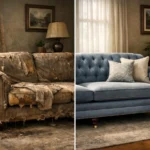
Introduction
It takes time to create a well designed interior. An attractive space comes from the creativity and vision of many people working together with care, not from shortcuts or rushing decisions. Everything a person sees is the result of choices made long before anything is assembled or put into use. How items are measured, which materials are selected, and how they are finished all shape high quality interior finishes. These decisions affect how a space feels, how it functions day to day, and how well it lasts over time. When this work is handled carefully at the beginning, the final result feels complete and intentional rather than temporary.
The professional and highly skilled labor has been largely unnoticed; it doesn’t attract attention to itself and instead tries to keep low key. You notice this by the natural flow of things; it all comes together really well. You can look up at the curtains, and they will lay nice and straight without bunching up, and the boundaries also stay nice and straight over time without any shifting. There is no stiffness or forced placement; rather, these things are all supporting everyday living because these same items are able to withstand the stresses of everyday usage for a long period of time.
The Role of Skilled Craft in Interior Results
- Precision matters more than speed
Working in haste creates a situation for problems that manifest later on down the road for those workers who possess the skill to do the job correctly. Those skilled workers will slow down at the beginning to avoid creating more difficult issues to solve once that job has started.
- Materials behave differently
All fabrics and materials have different ways they respond to weight, light, and tension. Experience has shown them the best way to handle those differences without causing damage.
- Consistency creates balance
When everything in a space follows the same standard, that space feels calm. When different standards are used throughout a space, it creates a feeling of discontinuity.
- Details decide longevity
The smallest decisions made concerning stitching, support, and finishing impact how long each piece maintains its shape and form.
- Installation completes the work
The installation made without care can negatively impact the installation made with care. A skilled worker protects the final product until the final work steps are completed.
Why Skilled Work Shapes the Final Outcome
The overall quality of an interior finish depends on how well each phase of the project is handled and on the level of skill applied throughout the process. Careful control at every stage helps keep work aligned and consistent, which is essential for achieving high quality interior finishes. When experience is lacking, problems often stay hidden during production and only appear later as uneven lines, poor fit, or early wear. At that point, fixing the issue may require complete rework rather than simple adjustments.
A skilled craftsperson will never hurry through any part of the job; every part of the job will always be completed as planned and in accordance with established guidelines. Each phase of the project depends upon the previous phase’s completion. Measuring establishes the baseline, accurately measuring for cutting, building a solid structural base, refining the surface finish of the final product, etc. The proper sequencing of these steps results in the durability of the finished product and an overall higher level of satisfaction with the completed work. Points of clarification that will help you understand this process and the way that it results in products being able to stand the test of time.
1. Accuracy at the Start
Precision in Measurement is at the base of creating Quality Work. When we measure incorrectly in the beginning, this error is carried with us through to the end of the process. Poorly measured dimensions result in the improper placement of materials, thus creating further difficulties to adjust later in the process. Professionals in the Interior Finishes Industry understand where in the process measurement is critical to obtain the best quality finishes. These individuals do not rush forward until they have taken time to verify, re-verify and ensure they have measured accurately. They understand by taking their time to accurately measure at the beginning of the project, they can eliminate significant issues later on down the line.
The professionals will also be measuring what they find in the real world rather than measuring everything according to what they believe is the “ideal” world. We rarely see “perfect” spaces. Walls and other supporting structures change over time. The way we finish our projects will typically reflect these imperfections unless the individual has the experience and education to see these situations for what they are and adjust their approach to a final product that feels balanced and “at home.”
2. Understanding Material Behavior
Gravity, tension, and time are three factors that can affect the behavior of materials. For example, when fabrics are hung up, they will elongate. Linings will react to specific forms of energy, such as light and heat. The force of gravity will pull down on an object, this pull will be determined by how a material was engineered. All of these changes happen in stages, making it important for designers to consider their design decisions early enough.
Experienced artisans can predict how force and gravitational pull will allow for movement in fabric. They leave space between all portions of a design instead of trying to force it into a rigid shape. A properly crafted piece will remain stable and will reduce the chance of distortion or sagging as time passes.
3. Clean Construction Techniques
The best construction methods are discreet. They provide structural support without being visible, yet they are essential for everyday use. Straight seams and secure connections keep materials aligned and stable under constant tension. By reinforcing areas that carry heavier loads, the structure behind high quality interior finishes stays strong and does not weaken over time.
These construction methods also serve to prevent the visible surface from being stressed. Through a well-constructed bed frame, the visible layer will not be put under stress it was not designed for. Over a period of time, this assures that the finished piece will appear as it did when it was first created and will not warp, change shape, lose stability, or break down as a result of heavy use.
4. Balanced Proportions
The proportions in a room are more important to the comfort than the aesthetic qualities; if something is overstuffed or undersized, the room may seem uncomfortable to sit in or spend time in, regardless of how attractive the materials used are. Properly proportioned furniture will help ensure that the fullness of the furniture, the length of the legs, and the distance between pieces fit harmoniously within the dimensions of the room, preventing any one excess from taking over the room.
The balance of proportions within a room provides the ideal feeling of completion. There won’t be any pieces that draw your attention away from the function of the room, and the overall style will work with the function of the room rather than against it. In rooms with well-proportioned pieces, you won’t experience an overwhelming sense of chaos and confusion when you enter or spend time in the room.
5. Attention to Edges and Finishes
Edges show how a project has been completed. They are often the first sign of rushed or careless work. Clean hems and smooth corners require patience and control. These details cannot be rushed without affecting the final outcome, especially when aiming for high quality interior finishes. Skilled workers focus closely on edges because they know even small flaws will become noticeable very quickly.
If a worker creates edges without defects, the edges become part of the design rather than drawing attention away from the design. Defects on edges ruin the intended visual flow of the design and draw your attention to themselves. Therefore, careful finishing is more important than additional embellishment.
6. Consistent Workmanship Across Pieces
The entire room functions collectively, rather than being thought of as disjointed elements. Even if all your furniture has quality craftsmanship, if the level of attention does not match, something may feel “off” in the space. Professional craftsmen provide the same attention to detail in every component of a finished interior to create equal-quality interiors that are fully cohesive. Regardless of the size of the item or location in the room, every piece receives equal understanding and consideration as part of the overall plan.
This way of creating your finished interiors creates consistency, so that no one element “stands out” for the wrong reasons, and nothing feels disjointed, or partial. By ensuring that all items in a particular space reflect the same level of quality craftsmanship, your finished room will reflect a sense of intentionality and cohesiveness, as opposed to being merely a collection of disparate items.
7. Problem Solving During the Process
The presence of unanticipated challenges is a given in all projects, irrespective of how much care goes into their planning. Measurement variances are possible as well as unexpected performance from various materials used in the construction phase. By understanding and developing the proper skill set, trained labourers quickly identify the change and respond proactively rather than reactively.
With years of experience, they develop an eye for opportunities to correct errors before they occur rather than trying to fix the error later in the process or after the finish. Furthermore, all of the adjustments made are executed intentionally and quietly, which leaves an impression of the completed piece as it would have looked if planned that way from the beginning. There is nothing about the work that looks like a repair or reconstruction. The end result appears to be a product that was meant to be constructed that way from the beginning.
8. Respect for the Design Intent
The idea that skill supports the original plan means the design is carried out as intended, not changed during execution. Proportion, spacing, and detail stay consistent with the planned direction, which is essential for high quality interior finishes. Skilled workers understand the importance of following the design documents closely rather than relying on personal interpretation or making changes that could alter the final result.
Because they respect each element being consistent with each other throughout the process, the finished product is a cohesive unit; nothing appears disconnected, and all parts work together as intended. When a skilled worker has followed the original plan when it was created, the final product is clear, complete, and cohesive and is therefore considered a success.
Looking for interior work done the right way? For reliable results and careful execution, trust the experienced team at Mayfair Workroom.
9. Structural Support Where Needed
Certain parts of a project will receive greater amounts of stress than others. Areas of a project that will support weight, move, or experience repeated use will require further consideration than others. An experienced contractor knows how to identify these areas early on during installation and provide additional support to protect high-quality interior finishes from degradation over time before issues develop. In addition, installing proper support helps to prevent stress from transferring or “spreading” to adjacent materials during and after installation.
Additional support for these types of areas is added in a way that it maintains the original aesthetic. Reinforcement of these areas is typically “hidden” and remains out of sight while still performing its function. These additional reinforcements strengthen the structural integrity without adding noticeable bulk and stiffness, thereby assisting with obtaining a clean and balanced appearance at completion.
10. Proper Lining and Backing Choices
The internal layers provide protective cover and support the piece’s performance over time by controlling the flow of light through it, the way the piece distributes weight, and how the materials will react to physical forces when utilized. Internal layers provide a significant amount of support and stability, and therefore, you may not see or notice these layers, however, they are critical to both the piece’s stabilizing features and the comfort it provides.
Choosing appropriate materials for the internal layers will minimize stress on the outer surface of the piece and prevent significant issues such as; excessive pulling, excessive fading, and uneven wear. By choosing the best materials for the internal layers and providing proper care, the life of the piece can be extended and will sustain its proper shape and function during normal usage.
11. Careful Handling During Installation
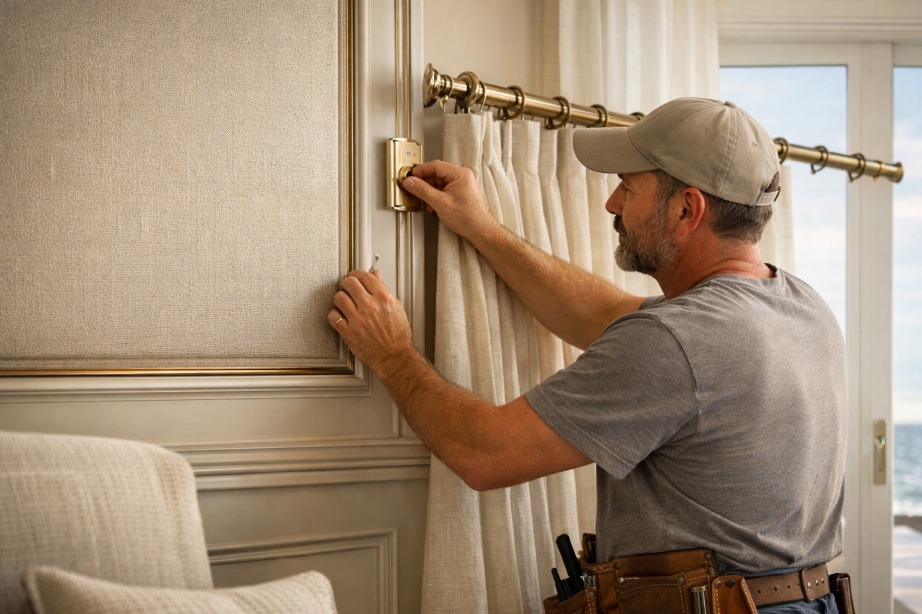
At this point in the process, installation represents a potentially vulnerable area, where high-quality work may be compromised based on how it’s treated when installing. For example, carelessly pushed into place during the install process or carelessly aligning, can negate all of the costs associated with planning and constructing the items previously on the work order.
Installers who have experience installing products will take their time installing items, being methodical in how they move products into the locations assigned to them. They will accurately reposition items to fit their intended location and carefully handle finished surfaces until the installation is complete. Because the installer has taken great care in placing these items, they will continue to be precisely where they belong until after the installation is over.
12. Long Term Wear Considerations
Day-to-day working plans that reflect practical scenarios rather than theoretical scenarios. The Plan also considers how users will interact with, adjust and apply the products in their various living environments for the constant maintenance of the high-quality finish on the interior surfaces of a product throughout its lifespan.
Stress points have been pre-identified and reinforced before they are a visible problem, protecting the pieces from normal use, movement and contact over time.
By preparing for these areas of stress prior to use, the entire piece will experience less wear and keep its original form longer. Additionally, it will be able to serve its intended purpose longer than if it were designed without addressing these potential issues.
13. Clean Alignment in the Space
Most people do not realize how much alignment affects the way a room feels. Even when materials are well made, slight misalignment can make a space feel uncomfortable and unsettled. This is especially noticeable in rooms with high quality interior finishes, where small shifts stand out more clearly. When elements are out of position, imbalance is created and attention is drawn to the wrong areas, which can cause a sense of unease.
Skilled professionals will spend time aligning and making all elements appear to belong to their environment as an entity. They will examine how all components relate to the overall space prior to making adjustments. Aligning elements provides calmness, balance, and visual stability in the atmosphere of a room.
14. Quiet Confidence in the Result
Artistic craftsmanship is unobtrusive. Decorative elements or expounding on the creation is unnecessary – it simply works as intended, albeit difficult to verbalise how “being right” gives this sense. Nothing appears forced nor out of alignment within the design aspect of the finished product. The overall ambience is tranquillity and stability within the surrounding space of the finished product.
Quiet assurance results from having attained each step through thorough planning, development, and completion (with no shortcuts or voids). When all steps along the supply chain are logically followed, the finished product should produce a sense of serenity that only results from true dedication to the execution aspect of producing quality interior finishes.
15. Fewer Fixes Over Time
Performing quality service minimizes the amount of corrective effort in the future by eliminating potential issues at the time of service and installation, rather than waiting until a problem arises after completion. Rather than being reactive once a problem arises, skilled service concentrates on preventing issues from occurring in the first place. Weak areas of the mechanical structure are discovered and strengthened early, and working with materials to reduce the effect of strain eliminates future strain.
All of this results in much less time, cost, and aggravation in the future due to fewer repairs and therefore fewer disruptions and replacements. Beyond the moment of installation, the benefits of a high-quality service will continue for many years because of how durable the system appears to be.
Final Thoughts
Craftsmanship is not about decoration or chasing trends. It is about skilled people working together to produce high quality interior finishes through careful execution. Every step in the process supports the next, and none of them are optional. When time and focus are placed where they belong, the result feels steady and intentional rather than rushed or uncertain.
Interiors built using craftsmanship will perform over time, giving you many good experiences from them. They can be used regularly without changing shape and losing function, although you may not always see the craftsmanship behind them, but every day you benefit from the craftsmanship of these products. Their dependable quality is the reason skilled craftsmanship is trusted over time.